Marking a farewell to the old and the welcoming of new hopes and aspirations, Pohela Boishakh, the first day of the Bengali calendar is more than just a date; it is a celebration of culture, unity, and fresh beginnings.
Across Bangladesh, from bustling cities to quiet villages, the day is filled with joy. Colorful processions like Mangal Shobhajatra, traditional foods such as panta-ilish, folk music, and vibrant attire bring life to the occasion. Celebrated annually on April 14, Pohela Boishakh stands as a national festival that reflects the spirit and heritage of the Bengali people.
While the rest of the country celebrates Pohela Boishakh, the indigenous communities of the Chittagong Hill Tracts observe their own traditional New Year festivals. During this time, the region transforms into a vibrant cultural landscape.
Three major festivals—Biju, Sangrai, and Baisabi—are celebrated by the Chakma, Marma, and Tripura communities, respectively. Though each festival has its own traditions, they share a common theme: letting go of past sorrows and welcoming the new year with joy, hope, and harmony.
Biju Festival (Chakma Community)
Biju is a three-day celebration, each day carrying its own significance:
Day 1: Phool Biju (Flower Biju)
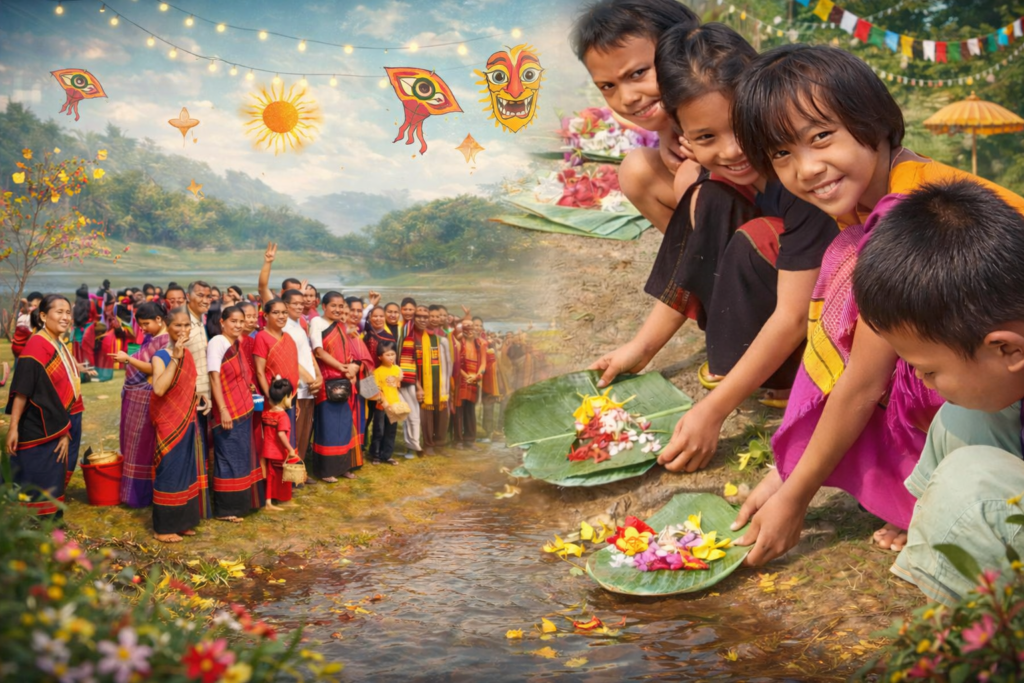
At dawn, young people gather flowers from hills and forests to decorate their homes. Flowers are also floated in rivers as a tribute to nature.
Day 2: Biju (Main Biju)
The most important day of the festival. Families prepare traditional dishes, especially pajon, a mixed vegetable delicacy. The day is filled with music, dance, and warm hospitality.
Day 3: Gojya Pojja
This day is dedicated to remembering deceased relatives. Religious rituals are performed to pray for their peace.
Sangrai Festival (Marma Community)
Sangrai is a major traditional festival rooted in Buddhist culture, celebrated around mid-April.
Jolkeli (Water Festival)
People splash water on each other in a joyful celebration. It symbolizes cleansing the past and welcoming a pure new beginning.
Floating Flowers
Flowers are floated in rivers or ponds as a gesture of farewell to the old year, representing peace and goodwill.
Sangrai is not just a religious observance, it is a lively cultural gathering filled with energy and joy.
Baisabi Festival (Tripura Community)
Baisabi is celebrated with rich traditions that include dance, music, cultural performances, and traditional food.
More than just a festival, Baisabi represents unity and social harmony. It brings people together, strengthening community bonds and preserving cultural identity.
A Deep Connection with Nature
One of the most striking aspects of these festivals is their strong connection to nature. Elements like flowers, water, and rivers carry deep symbolic meaning—expressing gratitude, respect, and harmony with the natural world.
A Growing Tourist Attraction
In recent years, Biju, Sangrai, and Baisabi have attracted visitors from across Bangladesh. The hill districts—Rangamati, Bandarban, and Khagrachhari—see a surge in tourism during this time, as people come to experience the unique cultural celebrations.
A Message of Unity
These festivals go beyond individual communities. They reflect the multicultural identity of Bangladesh, where people of different religions and backgrounds come together to celebrate.
At their core, Biju, Sangrai, and Baisabi are not just New Year festivals—they represent a way of life. They remind us of our roots, our connection to nature, and the beauty of living together in harmony.
By Pritam Sarkar (Feature writer)