Bangladesh’s political landscape has undergone repeated transformations since independence in 1971, with the banning of political parties remaining rare but deeply consequential.
Each period has reflected struggles over state identity, ideology and control of power, leaving a lasting mark on the country’s history.
From the immediate post-independence period to recent developments in 2026, the issue of political bans has evolved from targeting wartime collaborators to addressing security threats and, more recently, mainstream political forces.
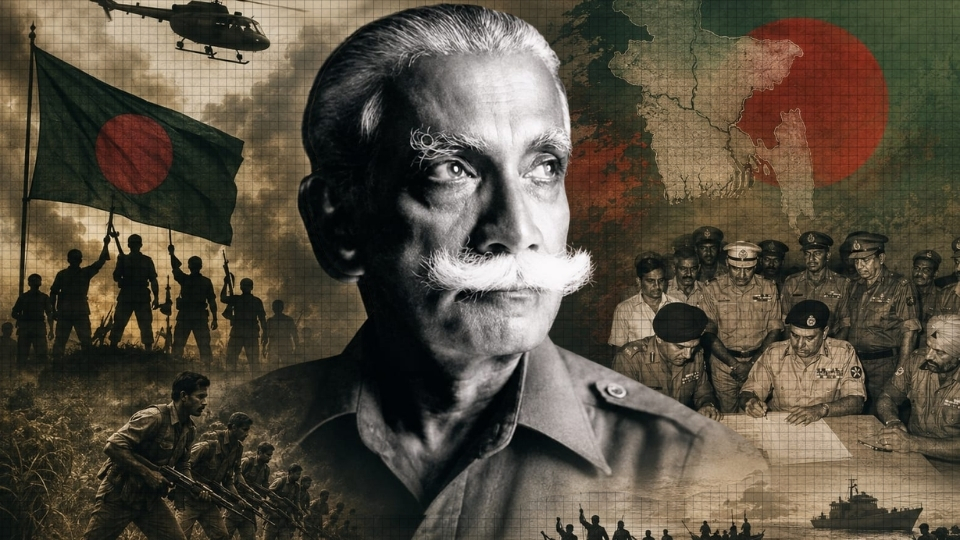
Following independence in 1971, the newly formed state moved quickly to define who could participate in its political structure.
Political groups that had supported Pakistan during the Liberation War were excluded from the state framework. Among the most prominent was Bangladesh Jamaat-e-Islami, which faced serious allegations over its role during the war. Other parties such as Muslim League and Nezam-e-Islam Party were also banned.
These measures were not only political responses but also a declaration of the new state’s ideological foundation, prioritizing secularism and nationalism.
However, within four years, the multiparty system collapsed. In 1975, President Sheikh Mujibur Rahman formed BAKSAL, dissolving all political parties. The move was presented as an effort to address political instability and economic crisis, while also centralizing power. The system collapsed within months following the assassination of Sheikh Mujibur Rahman on August 15, 1975.
The political trajectory shifted again under military rule. President Ziaur Rahman restored multiparty politics and lifted restrictions on religion-based parties, allowing previously banned groups to return to mainstream politics.
This period showed that bans were often temporary and closely tied to changes in power.
In 1976, President Abu Sadat Mohammad Sayem formally lifted restrictions on political activity. The Awami League was revived under leaders including Zohra Tajuddin, though internal disputes led to splits into factions such as Awami League (Malek) and Awami League (Mizan). Later, under Sheikh Hasina, further divisions emerged, and a reconstituted BAKSAL appeared under Abdur Razzak.
In subsequent decades, outright bans on major political parties became rare. Instead, the state focused on security threats posed by extremist organizations. The militant group Jama’atul Mujahideen Bangladesh was banned in 2005 after coordinated nationwide bomb attacks. Another group, Hizb ut-Tahrir, was banned in 2009 over allegations of inciting mutiny within the military and attempting to establish a caliphate.
These actions signaled a shift in the focus of bans from political rivalry to national security.
Controversy surrounding political restrictions resurfaced in 2013 when a court ruling canceled the election commission registration of Bangladesh Jamaat-e-Islami, effectively barring it from contesting elections while not fully banning the organization. Analysts described this as a partial restriction that limited political participation without complete prohibition.
The most significant recent development came after 2024 amid student protests and widespread political unrest. The government led by Sheikh Hasina was ousted, triggering rapid changes in the political landscape. The ruling Bangladesh Awami League faced arrests, legal cases and organizational fragmentation.
In 2025, the interim government banned the activities of the Awami League under anti-terrorism laws and suspended its registration. This marked the first time since independence that a major mainstream political party was formally banned.
As of 2026, the Awami League has not fully resumed political activities. Many of its leaders remain abroad, others are engaged in legal battles and the party continues efforts to reorganize.
Over five decades, Bangladesh’s experience with political bans reveals a recurring pattern shaped by ideological conflict and struggles for power. At times, restrictions were justified as necessary for protecting the state, while in other instances they were seen as tools for consolidating authority.
The history raises a persistent question: do bans resolve political crises or deepen them?
As Bangladesh moves forward, the issue remains highly relevant. Observers say long-term political stability is more likely to depend on tolerance, rule of law and democratic competition rather than restrictive measures.
By Pritam Sarkar (Feature Writer)