
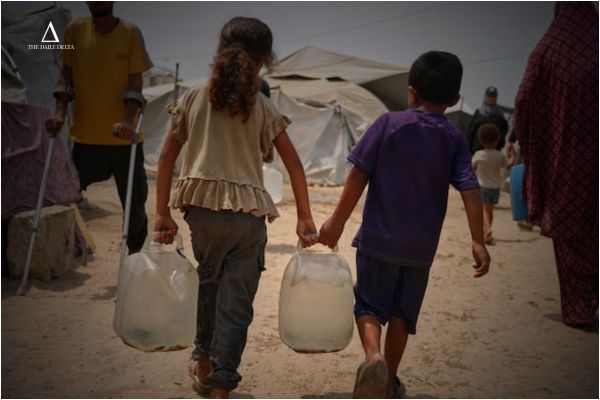
Families in Gaza are enduring a severe water crisis as a scorching heatwave grips the region, forcing many to drink contaminated water and risking widespread disease. In camps like Muwasi, hundreds of thousands line up under the sun to collect murky water, often rationing what little they have for drinking, cooking, and washing. Some, in desperation, turn to the sea when water deliveries fail.
The crisis has intensified over the past 22 months of conflict, with damaged infrastructure, fuel shortages, and polluted aquifers leaving only 137 of Gaza’s 392 wells accessible. Desalination plants are operating far below capacity, and many pipelines and transmission lines are destroyed or unusable.
As a result, Gaza’s population now relies primarily on brackish groundwater, previously used only for farming and cleaning. Drinking this water has led to a surge in illnesses—UNRWA health centers report treating around 10,300 patients each week for infectious diseases, mostly diarrhoea caused by unsafe water. UNICEF notes that acute watery diarrhoea cases have more than doubled since February, raising the risk of severe dehydration.
Residents receive less than 3 litres of water per person per day, far below the 15 litres recommended for drinking and hygiene. The water utility is forced to prioritize hospitals and people over sewage treatment, increasing the risk of sanitation-related outbreaks.
Efforts to improve the supply include Israeli steps to resume water deliveries and connect energy for desalination, as well as a new UAE-funded plant across the Egyptian border which may start sending water in the coming weeks. However, relief remains uncertain, and Gaza’s families continue to face daily hazards from heat, thirst, and disease.