
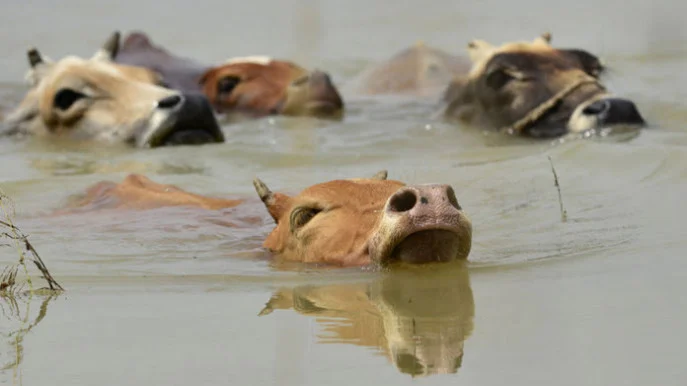
Devastating floods triggered by relentless torrential rains and uphill rushes have decimated the livestock sector across five districts in the Chittagong division, killing over 112,000 domestic animals and birds.
According to a preliminary assessment released by the Divisional Department of Livestock Services on Sunday (July 12), the disaster has caused an estimated financial loss of 301.5 million BDT, destroying farms and vast quantities of animal feed.
The official report reveals that the dead animals include 111,098 chickens, 1,521 ducks, 123 goats, 40 sheep and 46 cows. The direct loss from these deaths alone stands at 37.8 million BDT.
Beyond the loss of livestock, the floods have triggered a severe animal feed crisis across 156 unions in 36 sub-districts (upazilas) of the division. The report estimates the total damage to animal feed at 254.5 million BDT, with 18,468 tonnes of straw, grass and granular feed completely ruined.
A breakdown of the feed damage shows that 11,920 tonnes of straw worth 178.8 million BDT, 6,430 tonnes of green grass valued at 68.6 million BDT and 118 tonnes of granular feed worth nearly 7.08 million BDT were destroyed by the floodwaters.
The infrastructure of the livestock sector also took a heavy hit. The deluge submerged 2,126 acres of pastureland and damaged 33 livestock offices across the division. Additionally, 830 animals and birds across 65 farms were affected, resulting in a farm-related infrastructure loss of approximately 720,000 BDT.
Khagrachhari emerged as the least affected district in the division, reporting the deaths of three goats and 700 chickens. The financial loss from animal deaths in the district totaled 185,000 BDT, while the overall damage including feed destruction reached 1.91 million BDT.
Livestock officials emphasized that these figures are strictly preliminary. The total financial toll is expected to rise once the floodwaters fully recede and a comprehensive field-level reassessment is completed. Government initiatives are currently underway to provide emergency feed assistance and rehabilitation support to the affected farmers.