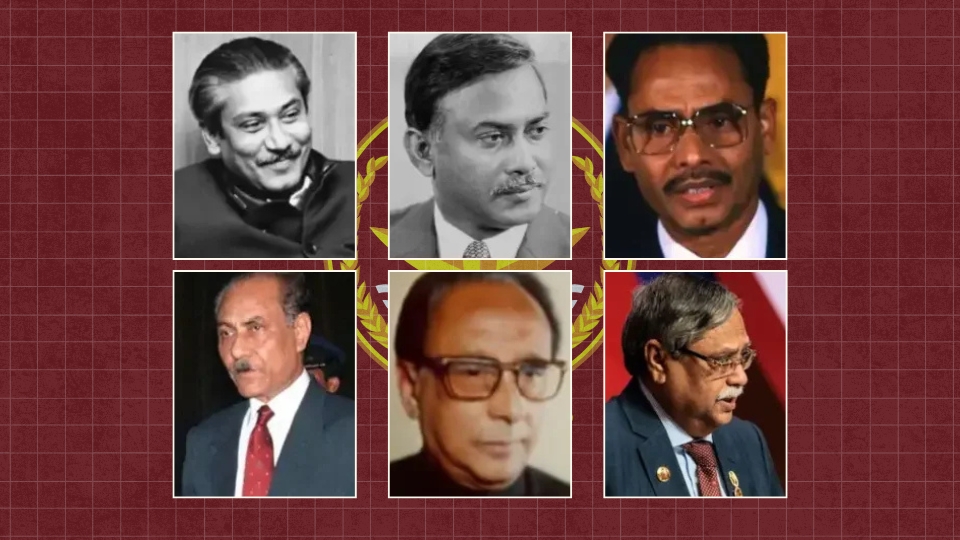
Lawmakers in Bangladesh are casting their ballots on Thursday in the country’s first competitive presidential election in 35 years to elect the 23rd head of state.
The election breaks a streak of eight uncontested presidential polls since the country returned to a parliamentary democracy in 1991. Parliament Speaker Hafiz Uddin Ahmad is currently serving as acting president following the resignation of the 22nd president, Md. Sahabuddin, on July 24, 2026.
Election Details and Candidates
Two candidates are vying for the presidency. The ruling Bangladesh Nationalist Party (BNP) has nominated its Secretary General and Local Government Minister Mirza Fakhrul Islam Alamgir. He faces Oli Ahmad, a decorated Bir Bikrom freedom fighter, former military officer and Chairman of the Liberal Democratic Party (LDP). Formerly a BNP politician, Ahmad is backed by the Jamaat-e-Islami-led 11-party alliance, which initially declared it would not field a candidate.
Voting will take place inside the parliament chamber from 2:00 pm to 5:00 pm. The electoral college consists of 349 voters out of 350 seats, as the Chittagong-4 result remains pending due to a court directive.
A victory for Alamgir is practically assured. The ruling BNP commands a two-thirds majority with 209 lawmakers. Furthermore, Article 70 of the Bangladesh Constitution strictly prohibits floor-crossing, dictating that any member of parliament voting against their party line will lose their seat. The Chief Whip of the parliament has announced that the newly elected president will take the oath of office on Friday evening.
History of Bangladesh Presidents
Since independence, 18 individuals have served as the head of state across 22 terms.
Sheikh Mujibur Rahman served as the first president of the government in exile from March 26, 1971 to January 12, 1972. Returning from a Pakistan prison, he established a one-party system and served his second term as the fifth president from January 25, 1975 until his assassination on August 15, 1975. During his imprisonment, Awami League senior vice-president Syed Nazrul Islam acted as president from March 26, 1971 to January 10, 1972.
Justice Abu Sayeed Chowdhury took office on January 12, 1972, but resigned on December 24, 1973, citing discomfort and feeling neglected. Parliament speaker and lawyer Mohammadullah, active in Awami League politics since 1950, served as acting president until taking full charge from January 27, 1974 to January 25, 1975, ending when one-party rule was introduced.
Khondaker Mostaq Ahmad assumed power after Sheikh Mujib’s assassination. He previously served as foreign, law and parliamentary affairs minister in the Mujibnagar government, later handling power, irrigation, flood control and commerce portfolios. He governed for 81 days before an overthrow led by Major General Khaled Mosharraf on November 6, 1975. First Chief Justice Abu Sadat Mohammad Sayem succeeded him. Historians view him as powerless under army chief Ziaur Rahman. He resigned on April 21, 1977 citing health reasons.
Army chief Ziaur Rahman took power on April 21, 1977. He established the Jatiyatabadi Ganatantrik Dal (Jagodal) and won a disputed election, ruling until his assassination on May 30, 1981. Vice-President Abdus Sattar became acting president before securing 66 percent of the vote in a controversial November 1981 election. On March 24, 1982, military chief Hussain Muhammad Ershad ousted him, making Sattar the first elected civilian president removed by a coup.
Justice AFM Ahsanuddin Chowdhury was installed on March 27, 1982 and removed nine months later on December 11, 1983 by Hussain Muhammad Ershad, who imposed military rule. Ershad retained power through a contested 1986 election before a mass uprising forced his December 6, 1990 exit.
Justice Shahabuddin Ahmed led a neutral caretaker government to organize elections, stepping down on October 9, 1991. He later completed a five-year term from 1996, serving as the 12th and 14th president. Abdur Rahman Biswas, a 1950s lawyer and former Barisal MP who held jute and health ministries under previous governments, served a full term ending on October 9, 1996.
BNP founding secretary general AQM Badruddoza Chowdhury took office on November 14, 2001. A former minister of health and family planning, education, science and technology, culture and foreign affairs under two governments, he resigned on June 21, 2002 facing a BNP no-confidence motion. Speaker Muhammad Jamiruddin Sarkar, a BNP standing committee founder and former minister of various portfolios including foreign affairs and law, served as acting president until September 6, 2002.
Former Dhaka University vice-chancellor Professor Iajuddin Ahmed became president on September 6, 2002. He briefly led the 2006 caretaker government and his term extended to February 12, 2009 due to political gridlock. Awami League general secretary Zillur Rahman, who acted as party chief during Sheikh Hasina’s 2007 arrest, took office in 2009 and served until his death on March 20, 2013.
Abdul Hamid, the longest-serving head of state, took over as acting president in March 2013 and completed two full terms until April 23, 2023. The 22nd president, Md. Sahabuddin, assumed office on April 24, 2023. Surviving the July mass uprising and subsequent transitions to an interim and elected BNP government, he resigned on July 24, 2026 citing physical complications.