
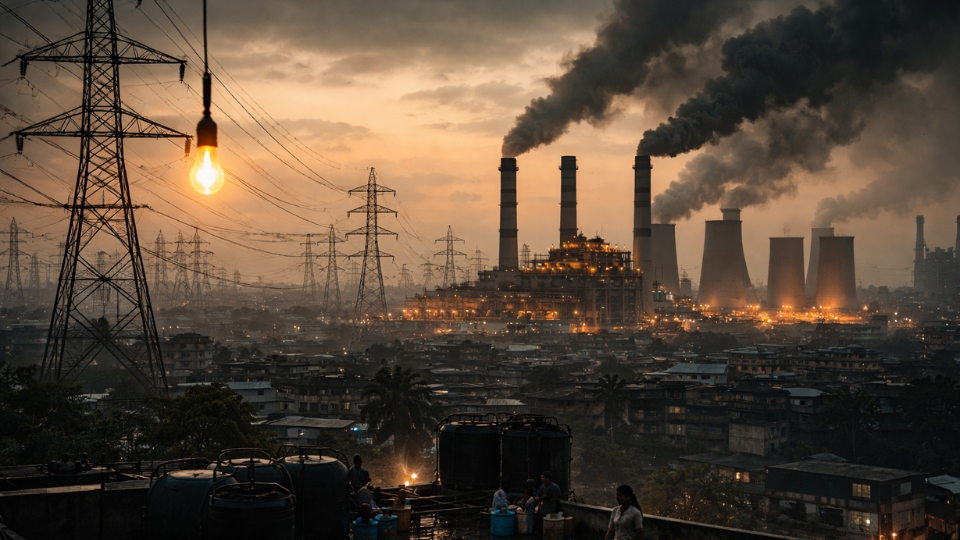
A worsening fuel and gas shortage has pushed Chattogram’s power supply into crisis, forcing the shutdown of 10 out of 28 power plants and triggering daily outages of up to five hours across the city during an ongoing heatwave.
According to data from the Chattogram System Control (SCADA), electricity demand stood at 1,291.60 megawatts at 11:00 am on Friday, while supply reached only 1,200.70 megawatts. The shortfall of around 91 megawatts led to load shedding from the start of the day. Although generation increased slightly in the evening, a significant portion was diverted to the national grid, leaving local shortages unresolved.
Several major plants remain offline due to the fuel crunch. These include the Raozan Units 1 and 2 with a combined capacity of 420 megawatts, the Matarbari coal-fired power plant, and Juldha Units 2 and 3, which together produce 200 megawatts. At the Kaptai Hydropower Plant, only two of five units are operational. The remaining units are inactive. Other facilities, such as the Anlima, Judiyak, and Cox’s Bazar wind power plants, are also currently shut down.
As a result, Chattogram’s electricity supply has become heavily dependent on two sources: the Banshkhali SS Power Plant, which generates 612 megawatts, and the Shikalbaha power station with a capacity of 218 megawatts.
Frequent outages have been reported across the city, including in Chakbazar, Bahaddarhat, Agrabad, Halishahar and Bakalia. In many areas, it takes two to three hours for electricity to be restored after a blackout.
The disruption has also triggered a severe water shortage, as the Chattogram Water Supply and Sewerage Authority struggles to operate pumps without a stable power supply.
Officials warn that electricity demand could exceed 1,300 megawatts if temperatures rise further. Without a swift normalization of fuel supply, the situation is expected to deteriorate.