
A fresh round of political finger-pointing has erupted among key figures in Bangladesh’s interim political scene, exposing deepening cracks within the post-uprising power structure.
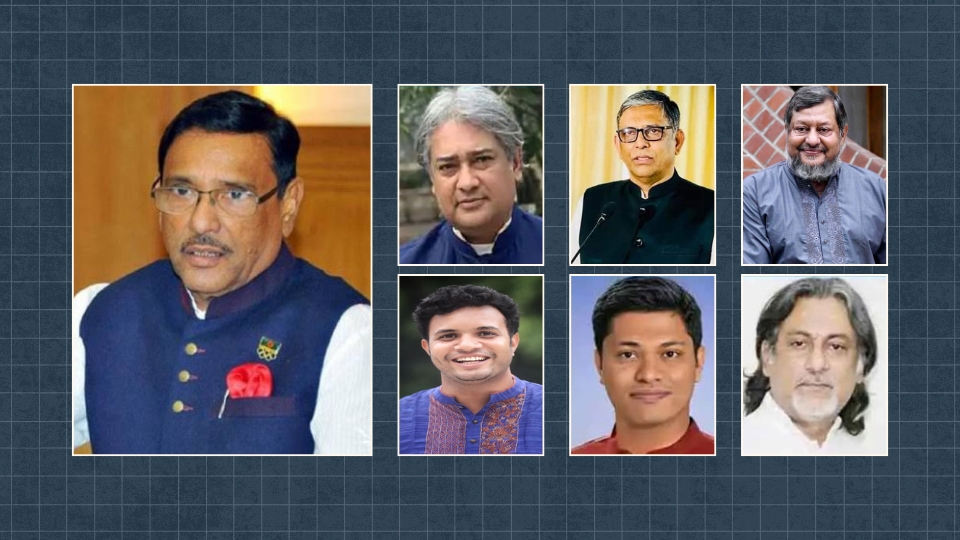
Following the August 5 uprising that reshaped the country’s political landscape, Information Adviser Mahfuz Alam accused the BNP and Jamaat-e-Islami of dividing control of the state administration between themselves.
Speaking at a roundtable titled “Gonomaddom Soniyontron O Ovijog” (Media Self-Regulation and Complaint Management) at the SIRDAP Auditorium on Sunday (September 28), Mahfuz Alam alleged that both parties had carved out administrative influence since the mass movement that toppled the previous regime.
He also criticized sections of the media, saying many outlets continue to serve “business interests rather than the national interest.”
Nur’s Counter-Charge: “Three Parties Shared Power”
In a sharp rebuttal, Gono Odhikar Parishad President Nurul Haque Nur accused the interim government, led by Dr. Muhammad Yunus, of favoritism toward three political forces — BNP, Jamaat-e-Islami, and the National Citizen Party (NCP).
Speaking at another roundtable, “Rajniti Stitishilota: Nirbachon Bhabna” (Stability in Politics: Election Reflections), organized by The Daily Jugantor on Saturday (October 25), Nur said:
Mahfuz Alam claims the BNP and Jamaat divided up the administration. But we have seen the new party NCP also getting judges appointed. So all three parties shared power and even submitted lists to the Chief Adviser.
Nur alleged that the NCP made recommendations for key administrative positions, including deputy commissioners (DCs) and superintendents of police (SPs).
No one was appointed through my recommendation,” he insisted, “but under Hasnat’s influence, DCs and UNOs were appointed.
Hasnat’s Denial: “Prove It, and I’ll Resign”
The accusation prompted a strong response from Hasnat Abdullah, NCP’s chief organizer for the southern region, who categorically denied the claims and issued a public challenge:
If anyone can prove that I recommended appointments of DCs or SPs, I will resign from politics.
Hasnat’s emphatic denial has only intensified the ongoing blame game, as each side seeks to portray itself as above the political fray while accusing others of exploiting the interim setup.
Symbolic thorn and Power Struggles
Throughout his remarks, Nur continued to criticize BNP, Jamaat, and NCP, accusing them of political opportunism. He also mocked the NCP’s insistence on using the “Shapla” (water lily) symbol, calling it “unnecessary and irrational.”
Since the symbol isn’t gazetted, it’s meaningless for educated people to fight over it,” Nur quipped.
These exchanges have fueled speculation about internal power struggles within the interim framework — a government meant to stabilize the country after the uprising but now seemingly caught in partisan turf wars.
As accusations and counter-accusations multiply, the lines between political principle and opportunism continue to blur. Whether the allegations hold any truth or are mere political theater, one question lingers in the public mind that “Who is really faking it at the end of the day?”