
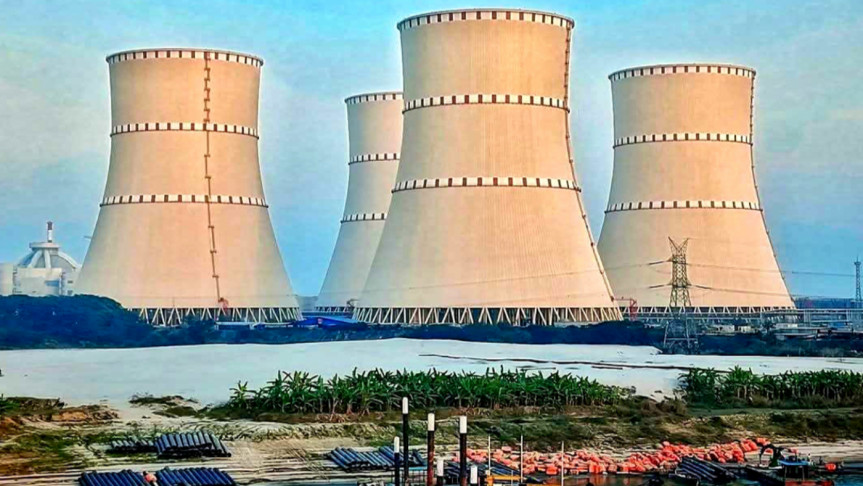
Bangladesh marked a historic milestone on Tuesday as it began loading uranium into the first unit of the Rooppur Nuclear Power Plant, signaling the nation’s formal entry into the final stages of joining the global club of nuclear energy producers. With this advancement, Bangladesh is poised to become the 33rd country in the world to harness nuclear power for civilian use.
Fuel shortage shuts 10 of 28 power plants in Chattogram
The process involves inserting uranium fuel assemblies into the reactor core, where controlled fission will generate intense heat. This heat will convert water into steam to drive turbines, ultimately producing electricity. While the physical loading began today, officials noted that this is a meticulous operation expected to take approximately 30 days under strict international safety protocols.
The Ministry of Science and Technology described the event as the definitive step toward commercial production. “This is the final phase before we begin supplying electricity to the national grid,” said Md. Anwar Hossain, Secretary of the Ministry. He added that the plant is expected to begin an experimental supply of 300 megawatts to the grid by August, eventually providing 10 to 12 percent of the country’s total power demand.
US Imposes Sanctions on Two Major Russian Oil Companies
The ceremony was attended by Fakir Mahbub Anam, the Minister of Science and Technology, alongside senior advisers and Alexey Likhachev, Director General of Russia’s State Atomic Energy Corporation (Rosatom). Rafael Grossi, Director General of the International Atomic Energy Agency (IAEA), joined the proceedings virtually, emphasizing the global oversight accompanying the project.
The Rooppur project, the largest single infrastructure undertaking in Bangladesh’s history, is being constructed by Atomstroyexport, a subsidiary of Rosatom, at a cost of approximately $12.6 billion. The twin-unit plant will have a combined capacity of 2,400 megawatts.
Despite the celebratory tone, the project has faced significant headwinds. Originally slated for completion in 2023, the timeline has shifted by three and a half years due to disruptions caused by the COVID-19 pandemic and logistical complexities following the Russia-Ukraine war. Financial strain, exacerbated by a fluctuating dollar exchange rate, has also seen project costs rise by an estimated 26,000 crore BDT (approx. $2.3 billion).
Professor Shafiqul Islam of Dhaka University’s Nuclear Engineering Department noted that while the fuel loading is a “major milestone,” the economic stakes remain high. “Every year of delay means missing out on nearly $1 billion in potential fuel import savings,” he said. “Commercial production must now proceed without further setbacks.”
Beyond the economic implications, the plant is being touted as a cornerstone of Bangladesh’s transition toward sustainable energy. Officials estimate that Rooppur will prevent the emission of 20 million tons of carbon dioxide annually compared to coal-fired plants.
The fuel itself—uranium oxide pellets housed in four-meter-long metal rods—will power the reactor for approximately 18 months before requiring replacement. Under a bilateral agreement, Russia will provide the fuel for the first three years and has committed to taking back the radioactive waste for processing, a critical factor in addressing long-term safety concerns.
As the reactor’s power is gradually ramped up from 3 percent to its full capacity over the coming months, the nation awaits the moment when nuclear energy finally begins to illuminate Bangladeshi homes, ending a journey that first began as a conceptual dream in 1961.