
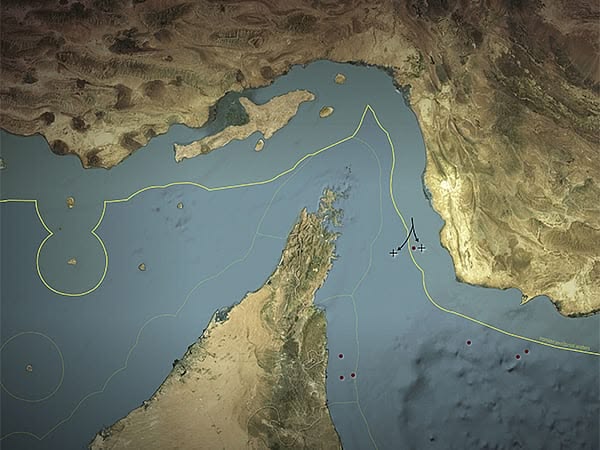
The Strait of Hormuz, a critical artery for global energy shipments, remains severely restricted despite a recently agreed two-week ceasefire between the United States and Iran. Hopes that the truce would restore normal oil and gas flows have quickly faded, as vessel traffic through the strategic waterway continues to decline.
Shipping data shows a sharp drop in transit activity. On the night the ceasefire took effect, 11 vessels passed through the strait. That number fell to five the following day and rose only slightly to seven on Thursday. Analysts say this is far below normal levels.
According to market intelligence firm Kpler, instead of improving, shipping activity has worsened since the ceasefire announcement. Meanwhile, Lloyd’s List Intelligence reports that more than 600 commercial vessels are currently stranded in the Persian Gulf, including 325 large oil tankers.
Before the escalation of the Israel-Iran conflict on February 28, between 120 and 140 ships used the route daily. That figure has now dropped dramatically to just 10–15 vessels per day.
US President Donald Trump has accused Iran of violating the ceasefire agreement by obstructing oil transport through the strait. In a post on Truth Social, he described Iran’s actions as “disrespectful” and contrary to the terms of the understanding.
Iranian Foreign Minister Abbas Araghchi rejected the accusation, instead pointing to ongoing violence in Lebanon. He stated that the United States must either ensure the success of the ceasefire or take responsibility for indirect conflict through its allies. Tehran has made it clear that navigation through the Strait of Hormuz now depends on its political discretion.
Oil prices initially dropped by about $3 per barrel following the ceasefire announcement. However, with shipping still constrained, prices have rebounded. As of Friday morning, Brent crude reached $96.39 per barrel. Analysts warn that prices could surpass $100 if full transit capacity is not restored soon.
The United Arab Emirates has strongly criticized Iran’s actions. Sultan Ahmed Al Jaber, CEO of Abu Dhabi National Oil Company, said that freedom of navigation has effectively been replaced by conditions imposed by Iran, calling it coercive rather than lawful.
Despite concerns over the Strait of Hormuz, Asian stock markets opened higher on Friday. Investor optimism, driven by gains on Wall Street and hopes of de-escalation, lifted Japan’s Nikkei 225 index by 1.8 percent. South Korea’s Kospi rose 2 percent, while Hong Kong’s Hang Seng index gained 1 percent.
The strait handles more than 20 percent of the world’s oil and liquefied natural gas supplies. Analysts warn that if the current slowdown continues, it could disrupt global supply chains and fuel inflation worldwide.
The next 48 hours are seen as crucial. Direct peace talks between Iran and the United States, scheduled to begin Saturday in Islamabad, are expected to play a key role in determining whether the crisis can be resolved.
Source: Al Jazeera